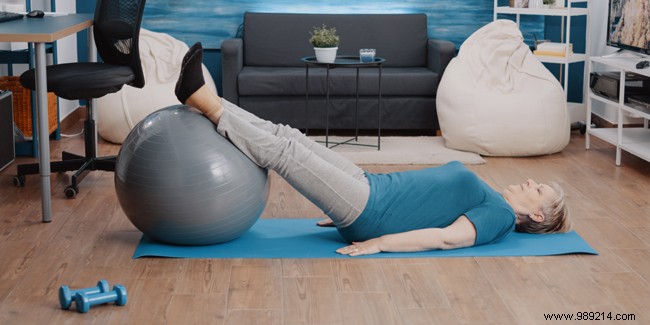
As we age, tissues and muscles throughout the body, including the pelvic floor, naturally weaken. This vital muscle supports key pelvic organs, and its decline can lead to issues like incontinence. Maintaining perineal strength is crucial for quality of life. Here, we share five effective, expert-recommended exercises to help seniors fortify their pelvic floor at home.
The perineum, or pelvic floor, forms a hammock-like structure from the pubic bone to the coccyx. It supports organs in the small pelvis, including those of the genitalia and anus. Lifelong maintenance is essential, as weakness can significantly impact daily life.
In women, perineal weakness may cause:
In men, it can lead to:
Women often face greater challenges due to a wider pelvic floor and pregnancy, but routine gynecological care and postpartum rehab raise awareness. Men may notice issues later, underscoring the need for proactive strengthening in both.
Sit upright in a chair with your back straight. Contract your pelvic floor for 5 seconds, then relax for 10 seconds; repeat 10 times. Progress to 10-second holds. Target the front (as if stopping urine flow) and back (as if holding in gas). Inhale during contraction, exhale on release. Advance by lifting your heels.
Lie on your back with feet on a chair or stability ball, arms at sides, palms up. Gently lift your pelvis, then raise your buttocks higher for 10 seconds while contracting the pelvic floor. Lower and repeat 5 times, progressing to 10.
Lie on the floor, hands behind neck, right foot on left knee (alternate legs each set). Lock the pelvic floor to close orifices. Exhale fully, then 'inhale' without air—allow your belly to expand. Repeat 5-10 times per leg position. Keep legs relaxed to avoid arching the back.
Start in the false thoracic breath position. Contract the pelvic floor incrementally, pausing 5 seconds per 'floor' until maximum lift. Relax fully, switch legs, and repeat 5 times.
Use a Pilates ball between your knees while lying on your back. Squeeze with knees for 5 seconds, engaging the pelvic floor first, then abs on the next set. Repeat 10 times.
Home exercises may not suffice—consult your doctor, gynecologist, or physiotherapist for an assessment. Professional rehab involves guided manual techniques or electrostimulation probes (vaginal for women, anal for men or fecal issues).
For severe prolapse or incontinence unresponsive to rehab, surgery repositions and secures organs with mesh.
Excess weight strains the pelvic floor. Sustainable loss, combined with rehab, often resolves issues like incontinence. Limit bladder irritants: spices, coffee, alcohol.
Stay active to maintain weight and delay aging effects on muscles.
Perineal issues affect 1 in 3 over 65—don't delay. Discuss with your doctor; early intervention restores comfort and confidence.